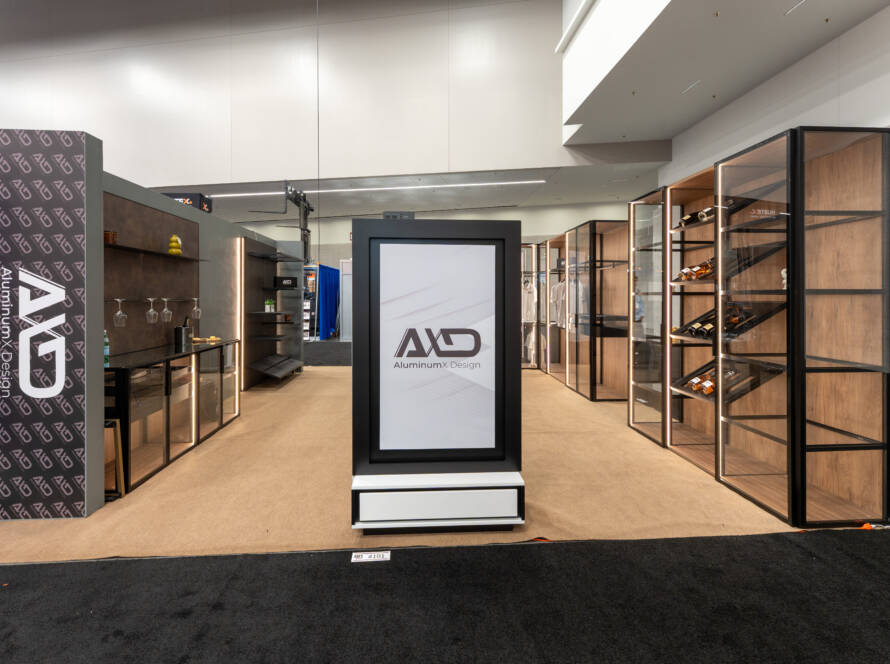
Glass inserts are what turn a slim aluminum cabinet frame into a display piece. The frame gives the structure and the lines; the glass panel inside it sets the mood, controls how much you see, and changes how the whole kitchen or cabinet reads. Choosing the right glass insert matters as much as choosing the frame, and there is more to it than “clear or frosted.” This guide covers what glass inserts are, the main types, how thick the glass should be, the safety basics, and how to pick the right one for your cabinets.
What Are Glass Inserts in Aluminum Cabinet Doors?
A glass insert is the glass panel set inside an aluminum cabinet door frame. Instead of a solid wood or MDF center, the door is built from aluminum profiles joined at the corners, with a sheet of glass held in a groove that runs along the inside of the frame.
The glass usually sits on a rubber or EPDM gasket inside that groove. The gasket grips the edge of the glass, cushions it, stops it rattling, and allows for the small movements that come with temperature changes. In most aluminum systems the glass is held securely but is not permanently bonded, so a damaged panel can often be replaced without scrapping the whole door.
Because aluminum is strong for its weight, the frame can hold a large pane with only a narrow visible border. That is what gives aluminum-framed glass doors their clean, architectural look.
Why Glass and Aluminum Frames Work Together
Glass and aluminum are a natural pairing for kitchen and furniture cabinetry.
- Slim profiles let the glass dominate, so wall cabinets feel open and display-ready rather than boxy.
- Aluminum resists moisture and heat, so framed glass doors hold up near sinks, dishwashers, and ovens where wood can swell.
- The frame finish changes how the glass reads. Anodized finishes such as matte black, metal grey, champagne, and bronze each give the same glass a different character.
- Glass keeps contents visible and moves light through a run of cabinets, which makes a kitchen feel larger.
The trade-off is that glass shows what is behind it, so it suits cabinets you want to display or light, paired with solid doors where you would rather hide clutter.
Types of Glass Inserts to Know
The glass you choose changes both the appearance of the door and how much you can see through it. These are the most common options.
| Glass type | Look | Best for |
| Clear float | Fully transparent, slight green edge | Everyday display, lit cabinets |
| Low-iron (extra-clear) | Truly colorless and crisp | Premium display, true-color contents |
| Frosted / satin (etched) | Soft, translucent, hides detail | Keeping light while hiding clutter |
| Reeded / fluted | Vertical ribs, textured, on-trend | Design-led kitchens, partial privacy |
| Tinted (grey, bronze, smoked) | Darker, moody, semi-see-through | Dramatic, contemporary cabinets |
| Lacquered / back-painted | Solid opaque color with a glass sheen | A colored “solid” door that still reads as glass |
| Mirrored | Reflective | Wardrobe and display backs, small rooms |
| Patterned / textured | Decorative (rain, cane, and similar) | Character and privacy |
A few notes on the popular choices. Low-iron glass costs more than standard float but removes the faint green tint you see on thick or clear glass, so whites and colors look true. Reeded and fluted glass is one of the most requested looks right now because it adds texture and blurs the view just enough to hide a tidy-but-not-perfect shelf. Lacquered (back-painted) glass gives a flat, solid color with a glass surface, and because the paint is on the back it has to be cut to size before it is finished.
Glass Thickness, Tempering, and Safety
Most aluminum cabinet door frames are designed around 4 mm or 5 mm glass, with some heavier systems taking 6 mm. The key is to match the glass thickness to the frame’s groove and gasket: a panel that is too thin will rattle, and one that is too thick will not seat properly. On a made-to-measure system the supplier sizes the groove to the glass, so confirm the pairing before ordering.
For safety, use tempered (toughened) glass, especially on larger doors and on lower cabinets that are easy to knock. Tempered glass is several times stronger than ordinary glass and, if it does break, it shatters into small blunt granules rather than long sharp shards. Laminated glass is another safe option, with a plastic interlayer that holds the pieces together if the pane cracks and also helps dampen sound. Many local glazing codes require safety glass in certain sizes and positions, so it is worth checking what applies to your project.
Glass is also heavier than it looks, at roughly 2.5 kg per square metre for every millimetre of thickness. A 5 mm panel weighs about 12.5 kg per square metre, which matters when you choose hinges and any lift mechanisms.
How to Choose the Right Glass Insert
Start with what the cabinet is for. If you want to show off glassware, ceramics, or a lit display, clear or low-iron glass is the obvious choice. If the shelves will be practical rather than styled, frosted, reeded, or tinted glass keeps the light without putting everything on show.
Then match the glass to the look you want the door to have:
- For an open, gallery-like feel, choose clear or low-iron glass with a slim frame.
- For texture and partial privacy, reeded or fluted glass pairs beautifully with a matte black or bronze frame.
- For drama, smoked or grey-tinted glass in a dark anodized frame reads moody and modern.
- For a colored, solid-looking door that still feels like glass, choose lacquered glass.
Finally, consider the frame finish. Bronze-tinted glass warms up against a champagne or bronze frame, while reeded glass looks sharp behind matte black. Because aluminum systems are usually made to measure, you can mix glass types across a kitchen, using clear glass on a feature display cabinet and frosted or solid doors elsewhere for balance.
Practical Things to Consider
A few practical points are easy to overlook but make a real difference.
- Weight and hardware: glass adds weight, so make sure hinges and any lift-up mechanisms are rated for the finished door. Soft-close hardware also protects the glass from the impact of slamming.
- Cleaning: glass wipes clean with standard glass cleaner; avoid abrasives that scratch. Reeded and textured glass needs a little more care within the grooves, and matte or low-iron surfaces hide fingerprints better than high gloss.
- Cost: clear float is the most economical, while low-iron, lacquered, and specialty patterned glass cost more. Tempering adds a small cost and is worth it for safety.
- Lead time: custom-cut, toughened, and back-painted glass is made to size, so allow for production time, especially on larger orders.
Common Mistakes to Avoid
- Skipping tempered glass on large or low doors, which is both a safety and a code risk.
- Ordering glass that does not match the frame’s groove, so it rattles or will not seat.
- Choosing clear glass for cabinets that will not stay tidy, then seeing every item on display.
- Forgetting the weight of glass when specifying hinges, leading to doors that sag or strain the hardware.
- Using standard float where colors matter, then noticing a green cast that low-iron glass would have avoided.
FAQs About Glass Inserts for Aluminum Cabinet Doors
What thickness of glass is used in aluminum cabinet door frames?
Most aluminum cabinet doors are built for 4 mm or 5 mm glass, with some systems taking 6 mm. The glass thickness must match the frame’s groove and gasket, so confirm the pairing with your supplier before ordering.
Should glass inserts be tempered?
Yes. Tempered (toughened) glass is recommended, especially on larger doors and lower cabinets, because it is much stronger and breaks into small, blunt pieces. Safety glass is also required by many local codes in certain sizes and positions.
What is the best glass for hiding clutter but keeping light?
Frosted (etched) and reeded or fluted glass are the best choices. They let light pass through while blurring the view, so shelves stay bright without everything being fully visible.
Can I replace a glass insert without replacing the whole door?
Usually yes. In most aluminum systems the glass sits in a gasketed groove rather than being permanently bonded, so a cracked panel can often be removed and replaced while keeping the frame and hardware.
Why does some clear cabinet glass look slightly green?
Standard float glass contains iron, which gives a faint green tint that is most visible at the edges and on thicker panes. Low-iron (extra-clear) glass removes that cast, so whites and colors look true, which is why it is popular for display cabinets.
Does glass make aluminum cabinet doors much heavier?
Glass weighs about 2.5 kg per square metre for each millimetre of thickness, so a 5 mm panel adds roughly 12.5 kg per square metre. It is manageable, but hinges and lift mechanisms should be rated for the finished weight, including the glass.
Final Thoughts
Glass inserts are where an aluminum cabinet door earns its character. Once the frame is set, the glass decides how open, private, bright, or dramatic the cabinet feels, so match the glass type to what you are storing, the look you want, and the frame finish, and use tempered glass sized correctly for the frame.
At AluminumX Design, we manufacture the aluminum profiles and made-to-measure framed glass doors behind kitchens, wardrobes, and display cabinetry, in finishes from matte black to champagne and bronze. If you are weighing up glass options for your cabinets, our team can help you match the right glass and finish to your design.